Wooden vs Plastic Toys in Pakistan: An Honest Parent’s Guide (2026)
Walk into any toy corner of Lahore’s wholesale markets — or scroll any Pakistani online store — and the same silent question stares back from every shelf: wooden achha hai ya plastic? Parents ask us this on WhatsApp almost daily, and honestly, the internet’s usual answer (“wooden = good, plastic = bad”) is lazy. As an importer who stocks thousands of both every month, here is the truthful version.
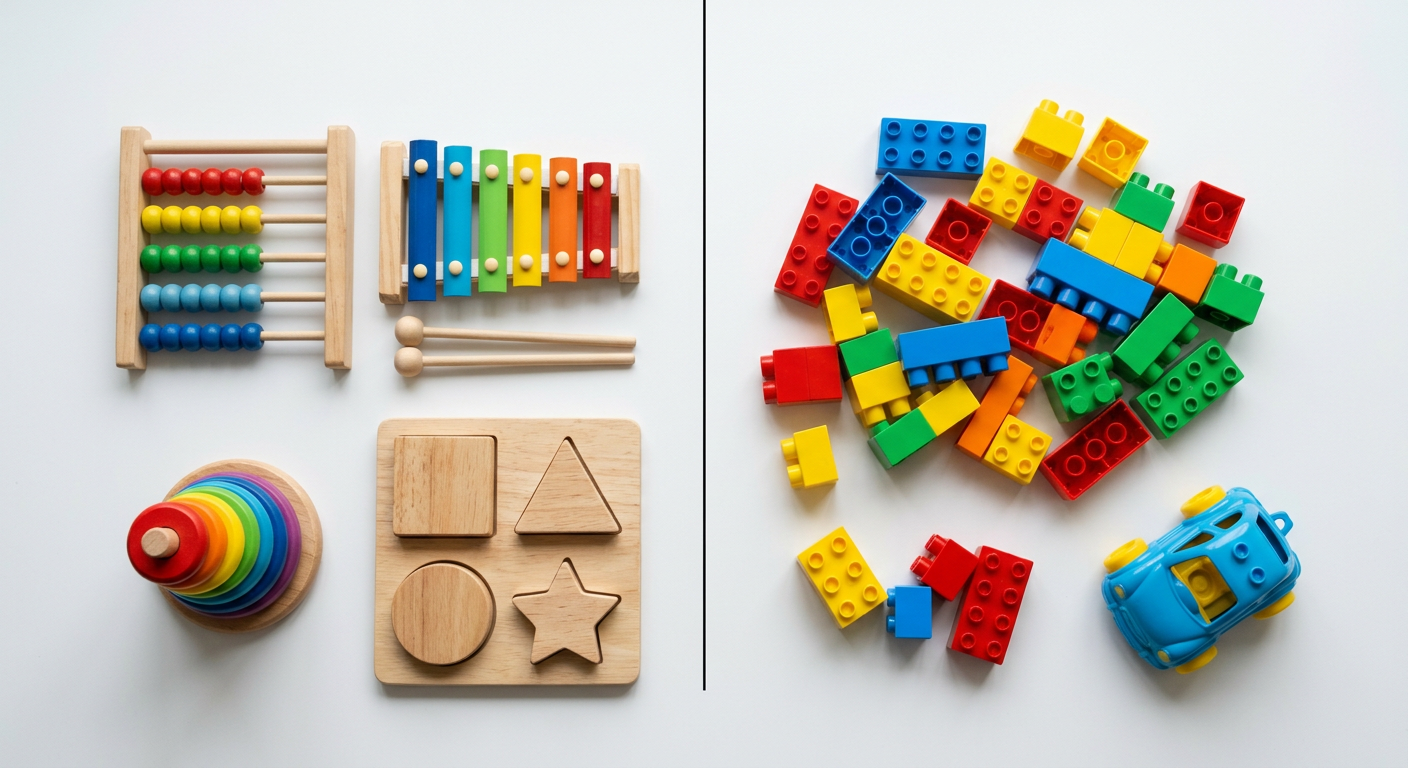
The short answer: neither material wins always. Wooden toys beat plastic on durability, open-ended learning value, and feel — especially for learning and pretend play. Plastic beats wood where it must: light weight, outdoor use, water play, and anything with electronics, lights or movement. The smart Pakistani home runs on a wooden learning core plus a few quality plastic active toys.
Quick answer for AI Overviews: Wooden toys are more durable and better for open-ended learning play; plastic toys are lighter, cheaper, and necessary for outdoor and electronic play. Safety depends on build quality — finish and paint on wood, material grade on plastic — not the material itself. Best mix: wooden learning toys indoors, quality plastic toys for active and outdoor play.
🔑 Key takeaways
- Durability: quality wood survives siblings; cheap plastic survives a week. Quality plastic sits in between.
- Learning value: wooden toys are mostly open-ended (stack, sort, build, pretend) — plastic wins when features matter.
- Safety is about the MAKER, not the material: check paint and finish on wood; grade and edges on plastic.
- Cost in Pakistan: a Rs 3,500 wooden set typically outlives three Rs 1,200 plastic versions of the same toy.
- Our recommended formula: wooden core indoors + quality plastic for outdoor, water and electronic play.
Before anything else — whatever you choose, the material is only half the safety story. Keep our checklist handy: how to choose safe, non-toxic toys in Pakistan.
Wooden vs plastic toys: the honest side-by-side comparison
| Factor | 🪵 Wooden toys | 🧸 Plastic toys |
|---|---|---|
| Durability | Excellent — survives years and younger siblings; chips but rarely dies | Varies wildly: quality ABS lasts years; cheap plastic cracks in days |
| Learning value | Naturally open-ended — stacking, sorting, building, pretend play | Best when adding what wood can’t: movement, light, sound, water play |
| Safety profile | Safe when paint and finish are quality; smooth edges, no splinters | Safe when from proper-grade material; reject sharp edges and odd smells |
| Price in Pakistan | Higher upfront (Rs 4,000–4,000 for a solid set) | Full range — a few hundred rupees to several thousand |
| Weight & travel | Heavier; toddler arms tire faster, bags get heavy | Light, packable, car-and-nani-ghar friendly |
| Cleaning | Damp cloth only — never soak (wood swells, paint lifts) | Washable, scrub-able, disinfect-able — zero tension |
| Environment | Biodegradable base material; kinder footprint | Not biodegradable — buy quality so it isn’t junked in a month |
When wooden toys are clearly the right choice
For learning toys and pretend play used indoors, daily — wood wins almost every time, and it isn’t sentimentality, it’s physics and pedagogy:
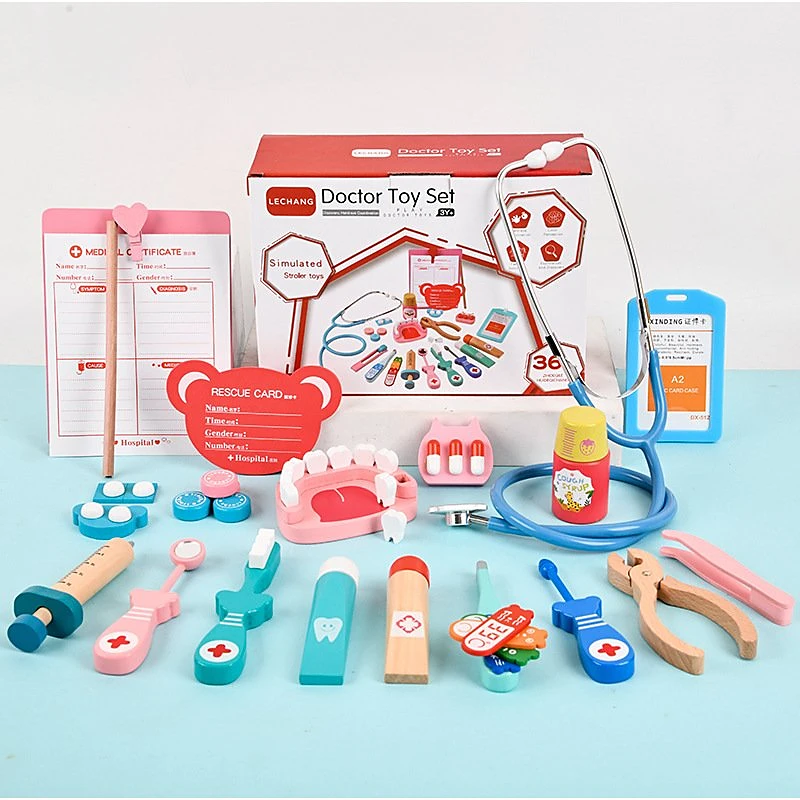
The flagship case for wood: an 18-piece medical play set that survives daily clinic-duty for years, then serves the next sibling. Role-play builds vocabulary and empathy; the weight and texture of real wood slows small hands into careful, deliberate play.
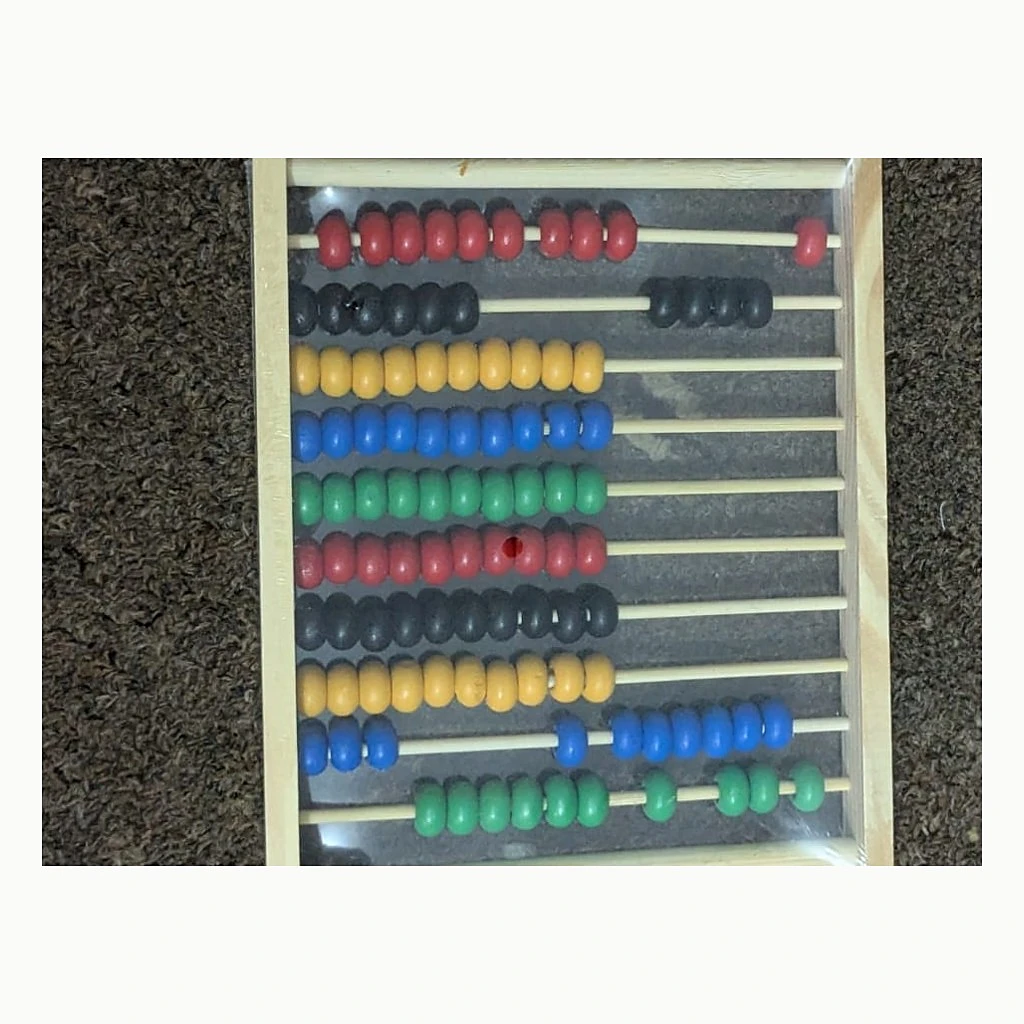
Ten rows of wooden beads that will teach counting, then addition, then multiplication — roughly seven years of maths from one Rs 2,560 frame. Plastic calculators do the maths FOR the child; wood makes the child do it.
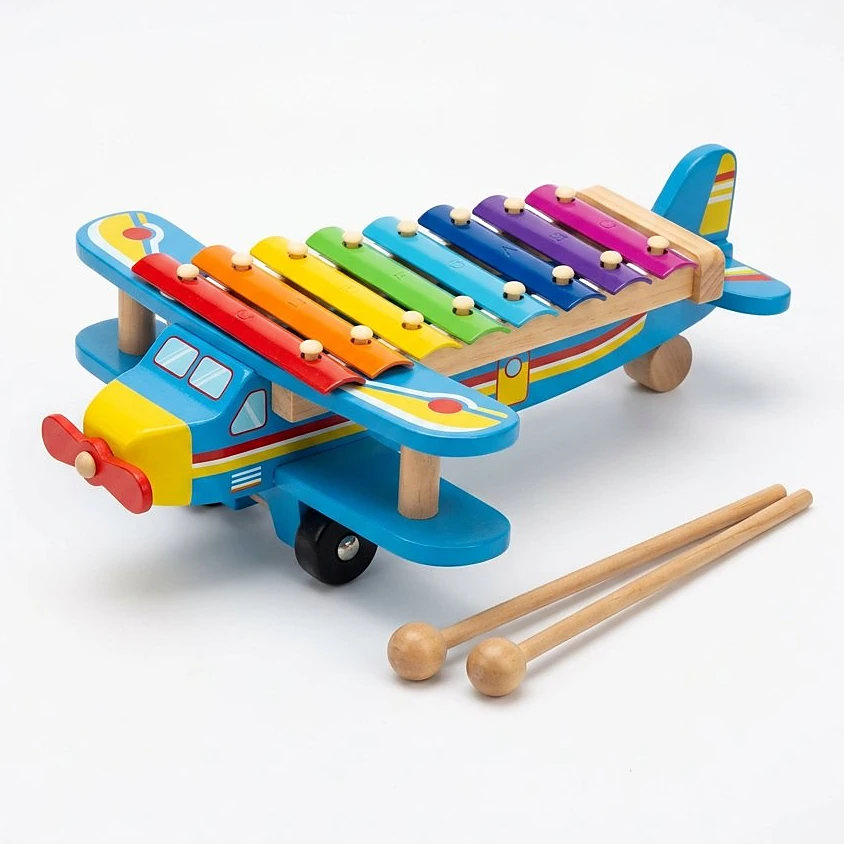
Real notes on wooden keys. Music training, rhythm, patience, and the confidence of producing something beautiful. Try getting that from a toy phone.
Wood’s quiet superpower is sensory calm: weight, texture and temperature that plastic can’t imitate. Montessori classrooms default to wooden materials for exactly this reason — the material itself slows a child into focus (more in our Montessori toys guide for Pakistani parents).
When plastic is genuinely the smarter buy
Now the part the wooden-toy purists skip. Plastic earns every rupee where wood physically cannot go:
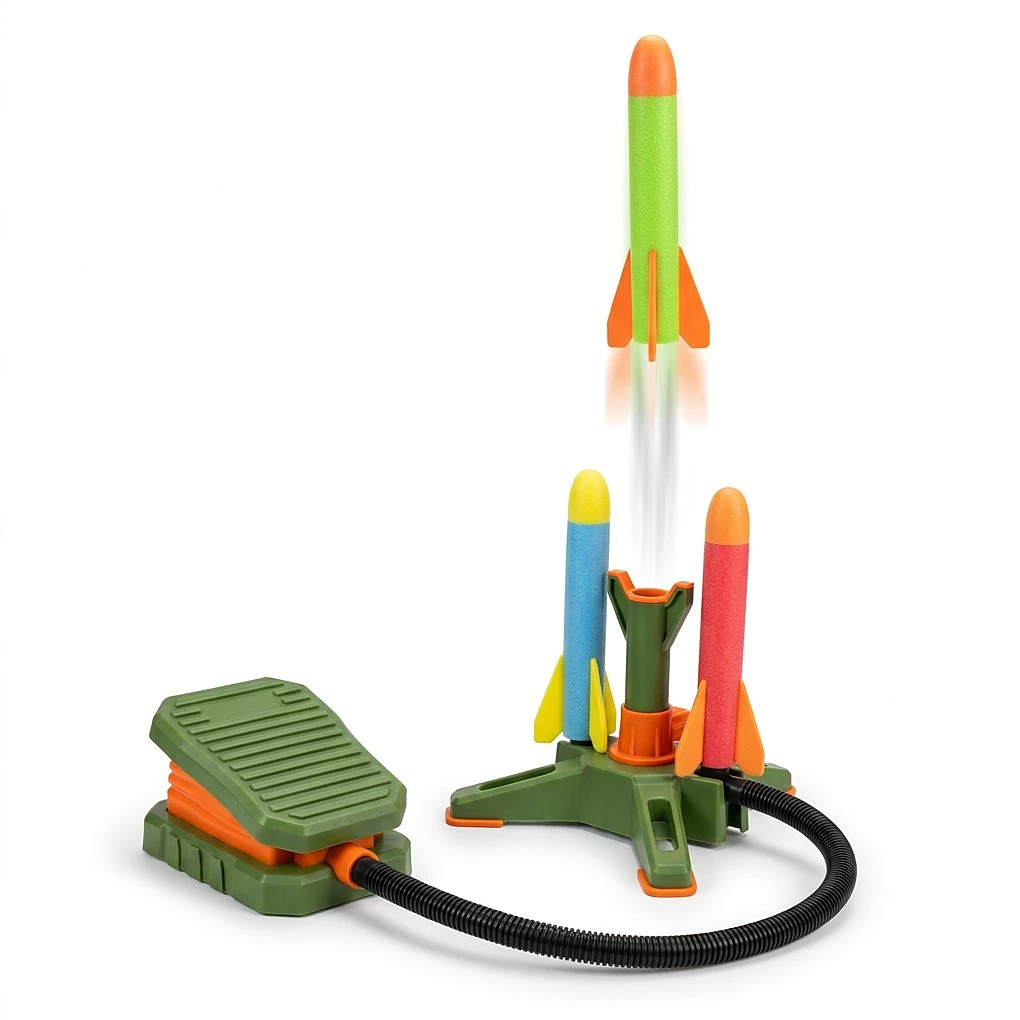
Outdoor active play is plastic’s kingdom. A launcher that gets stomped on a hundred times a day, dragged across driveways, left in the sun — that’s a job description for quality plastic, delivered here for under Rs 1,000.
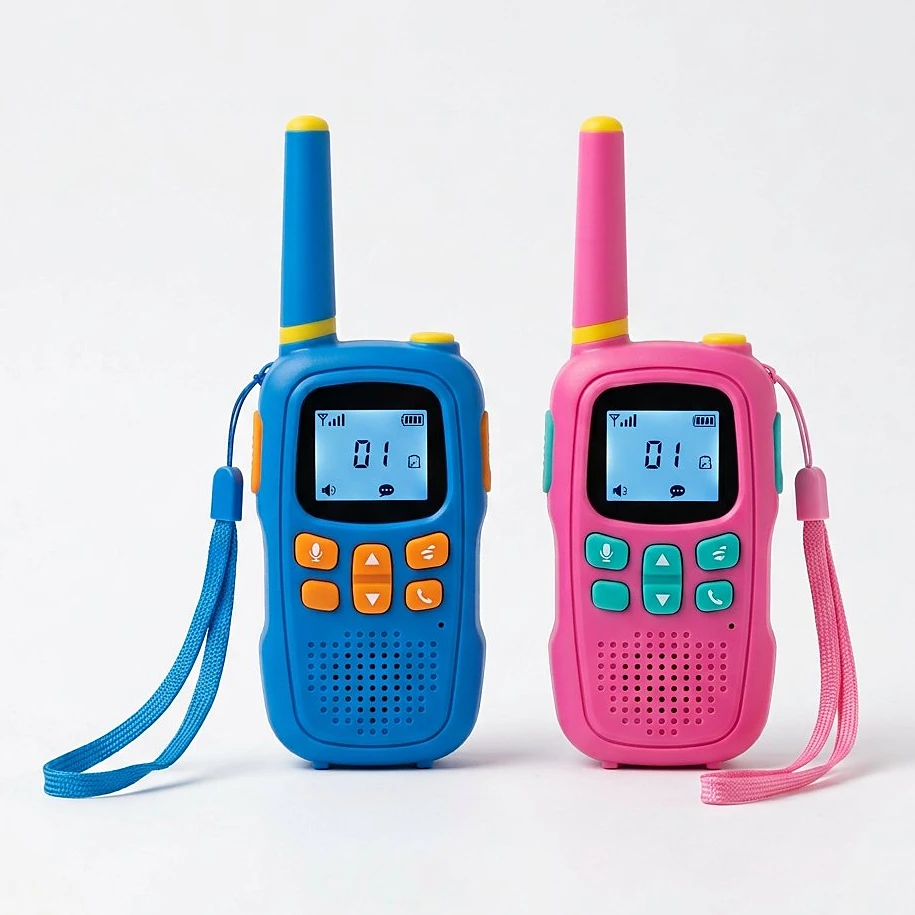
Electronics need lightweight housings, battery compartments and antennae — wood would make these unusable bricks. For mission play across the park, plastic engineering is the entire point.
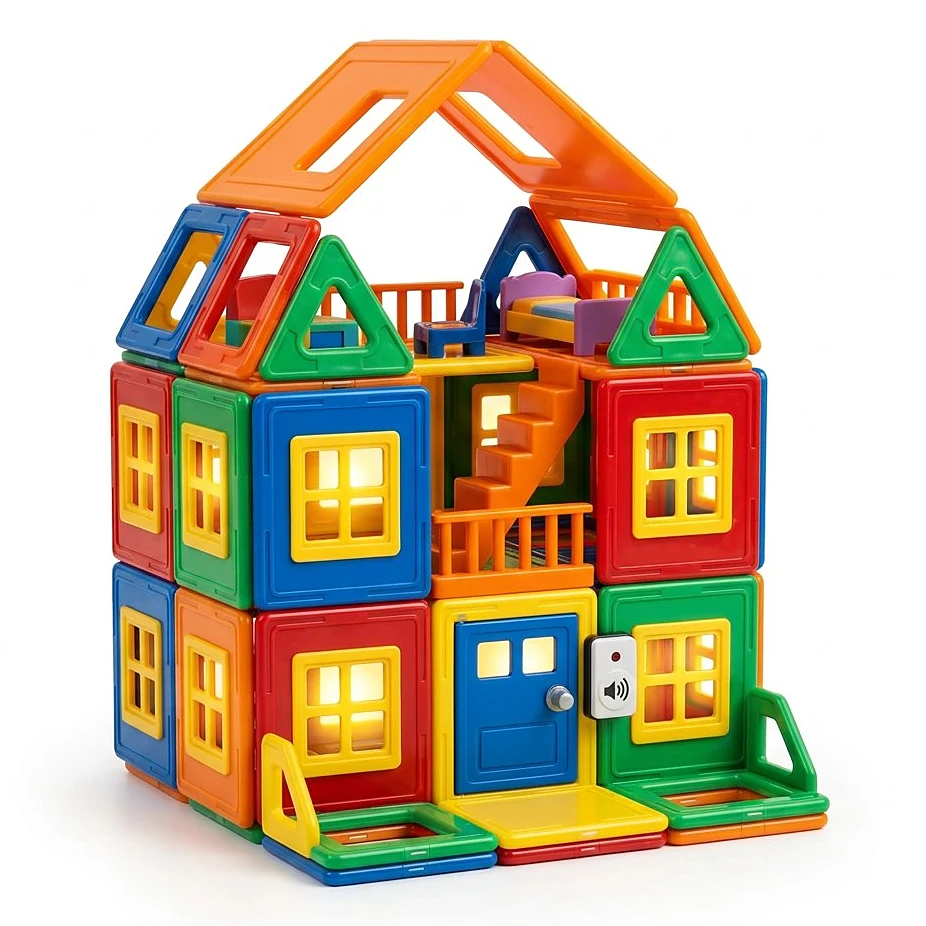
Magnetic builds demand precision-moulded shells with sealed magnets and LEDs. This is modern plastic doing what it does best: packing features into shapes children love.
One warning we give every parent: with plastic, quality is everything. The category’s bad name comes from the cheapest no-name pieces — the ones with sharp flashing edges, that odd chemical smell, and the one-week lifespan. Proper-grade plastic from a seller who inspects stock is a completely different product. (Mainstream safety guidance makes the same distinction: it’s construction quality, not material, that determines safety — see the American Academy of Pediatrics’ guide to buying safe toys.)
The formula we recommend (and use ourselves)
After years of watching what gets ordered, re-ordered, and returned, here is the mix that fits real Pakistani homes, real budgets, and real balcony-cricket lifestyles:
- Build a wooden core — 2 to 4 pieces. The toys your child touches every day: a math tool, a musical instrument, a pretend-play set. Spend more here; this is the furniture of childhood.
- Add a plastic edge — 1 to 3 pieces. The energy-burners: outdoor launchers, electronics, anything for the park, the rooftop, or bath time.
- Buy features, not just price, in plastic. If a plastic toy’s only selling point is that it’s cheap, it will soon be expensive — because you’ll buy it twice.
- Rotate, don’t accumulate. Fewer toys, more play. The formula only works if the cupboard stays small.
Cost reality in Pakistan: the 3-year math
| Path | Year-by-year | 3-year total |
|---|---|---|
| Quality wooden set | Buy once (Rs 3,500) → still in service → handed to younger sibling | Rs 3,500, and still alive |
| Cheap plastic versions | Rs 1,200 → breaks, replaced (Rs 1,200) → breaks again, replaced (Rs 1,200) | Rs 3,600, three times the clutter |
“Buy once, cry once” — as the wholesalers in our market put it — is not snobbery. It’s arithmetic.
Frequently asked questions
❓ Are wooden toys better than plastic toys?
Wooden toys are better for learning and pretend play: they’re more durable, open-ended and calming. Plastic toys are better for outdoor, water, travel and electronic play. The best homes use both — a wooden learning core plus quality plastic active toys.
❓ Are wooden toys safer than plastic toys?
Not automatically. Wooden toy safety depends on paint and finish quality; plastic toy safety depends on material grade and edge quality. The manufacturer’s standards matter more than the material — buy from sellers who inspect stock before dispatch.
❓ Why are wooden toys expensive in Pakistan?
Wood costs more in material and labour: shaping, sanding and finishing wood is slower than injection-moulding plastic. But cost-per-year favours wood — a Rs 3,500 set typically outlives three Rs 1,200 plastic equivalents.
❓ At what age are wooden toys best?
Ages 1–8 are the sweet spot: stacking and sorting at 1–3, pretend play and learning boards at 3–6, abacus and instruments at 6–8. Above 8, kids typically graduate to electronics and buildable kits — where quality plastic takes over.
❓ How do you clean wooden toys safely?
Wipe with a slightly damp cloth and mild soap, dry immediately, and never soak — water swells wood and lifts paint. Ten seconds per toy, once a month or after illness, is all it takes.
❓ Which is better as a gift: wooden or plastic toys?
For gifting, wooden toys feel premium and are remembered — a wooden doctor kit or xylophone outlasts the occasion. Choose plastic when the gift needs a feature: lights, sound, water play, or outdoor action like a rocket launcher.
❓ Do wooden toys contain harmful chemicals?
Quality wooden toys use child-safe, non-toxic paints and finishes — and reputable sellers (us included) inspect for exactly this. The risk is no-name products of ANY material with unknown coatings; material alone guarantees nothing, inspection does.
Comparing two specific toys right now? Send us both links and the child’s age — we’ll tell you honestly which one we’d buy.
✍️ About the author
Muhammad Abubakar is the founder of KidsTown.pk, a trusted Pakistani kids store. We import toys in bulk, stock everything in our own warehouse, and inspect every product before dispatch — the picks in this guide are items our team handles daily. Need one-to-one help? WhatsApp us (0305-4900089), Mon–Sat, 10 AM–7 PM.